
endrocrinology
Why Your Thyroid Matters: Symptoms of Thyroid Disorders
Introduction
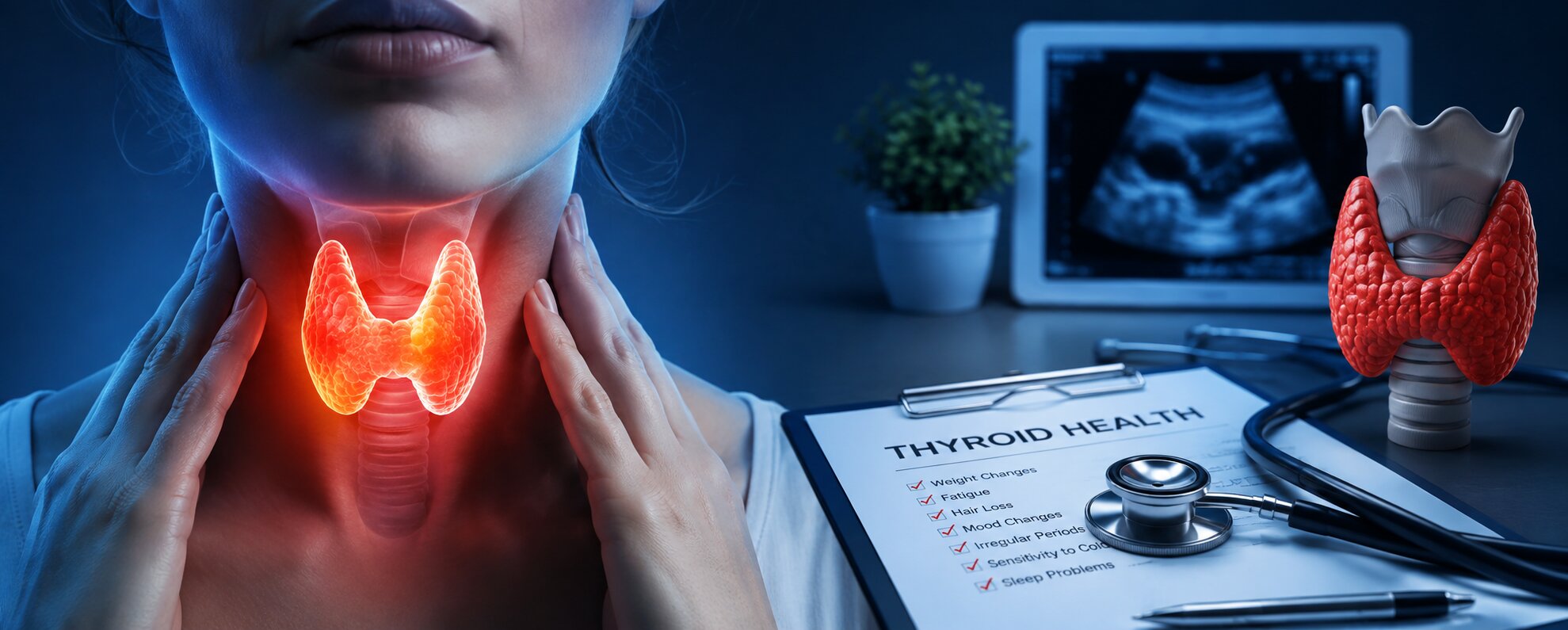
The thyroid is a small gland located at the front of the neck, but it plays an important role in many functions of the body. It produces hormones that help regulate metabolism, energy levels, heart rate, body temperature and other essential processes.
When the thyroid produces too much or too little hormone, changes can occur in different parts of the body. These changes may develop gradually and can sometimes be mistaken for stress, ageing or other common health concerns.
Knowing the common symptoms of thyroid disorders can help you recognise when it may be time to consult a doctor.
1. What Does the Thyroid Do?
Thyroid hormones are involved in several important functions, including:
-
Regulating metabolism
-
Supporting normal energy levels
-
Maintaining body temperature
-
Regulating heart rate
-
Supporting growth and development
-
Helping maintain normal body functions
The thyroid is part of the endocrine system, which produces and regulates hormones throughout the body. Problems can occur when the thyroid produces either too much or too little hormone.
2. What Happens When the Thyroid Is Underactive?
An underactive thyroid, known as hypothyroidism, occurs when the thyroid does not produce enough thyroid hormone.
Symptoms may develop slowly and can include:
-
Persistent tiredness
-
Unexplained weight gain
-
Increased sensitivity to cold
-
Dry skin
-
Constipation
-
Dry or coarse hair
-
Muscle cramps
-
Difficulty concentrating
-
Low mood
-
Irregular or heavier menstrual periods in some women
Symptoms can vary from person to person. Many of these symptoms can also occur with other health conditions, so they cannot confirm hypothyroidism on their own.
3. What Are the Signs of an Overactive Thyroid?
An overactive thyroid, or hyperthyroidism, occurs when the body has too much thyroid hormone.
Common symptoms may include:
-
Unexplained weight loss
-
Increased sweating
-
Feeling unusually warm
-
Rapid or irregular heartbeat
-
Anxiety or nervousness
-
Difficulty sleeping
-
Trembling or shaking
-
Frequent bowel movements
-
Muscle weakness
-
Changes in menstrual periods
Some people may also notice swelling at the front of the neck because of an enlarged thyroid gland.
If several of these symptoms occur together or continue for some time, it is advisable to seek medical evaluation.
4. Thyroid Problems Can Affect More Than the Neck
Thyroid disorders do not always cause noticeable changes around the thyroid gland. Changes in thyroid hormone levels can affect several areas of the body.
Possible changes include:
-
Energy levels
-
Body weight
-
Heart rate
-
Bowel habits
-
Mood
-
Sleep
-
Tolerance to cold or heat
-
Hair and skin
-
Menstrual cycles
Since these symptoms can have different causes, a doctor may review your medical history, perform a physical examination and recommend blood tests before confirming a thyroid disorder.
5. How Are Thyroid Disorders Diagnosed?
Diagnosis usually begins with a discussion about symptoms and medical history, followed by a physical examination.
A doctor may recommend blood tests to check thyroid function. Thyroid-stimulating hormone (TSH) and thyroid hormone levels are commonly assessed when a thyroid disorder is suspected.
Additional tests may be recommended depending on the person's symptoms and examination findings. If a swelling or lump is found in the thyroid area, further evaluation may also be required.
It is important not to start thyroid medicines or supplements without medical advice. Treatment depends on the type and cause of the thyroid disorder.
6. When Should You See a Doctor?
Occasional tiredness or a small change in weight does not necessarily mean that you have a thyroid disorder. However, persistent or unexplained symptoms should not be ignored.
Consider consulting a doctor if you experience:
-
Persistent tiredness
-
Unexplained weight gain or weight loss
-
Frequent heart palpitations
-
Noticeable changes in bowel habits
-
Increased sensitivity to cold or heat
-
Changes in your hair or skin
-
Irregular menstrual periods
-
Swelling or a noticeable lump in the neck
-
Several symptoms occurring at the same time
People already receiving treatment for a thyroid disorder should also attend regular follow-up appointments as advised by their doctor.
Maruti Hospital's Endocrinology department provides evaluation and management for thyroid disorders and other hormone-related conditions.
Conclusion
The thyroid is a small gland, but the hormones it produces influence many important functions in the body. Changes in thyroid hormone levels can affect weight, energy, heart rate, digestion, sleep, mood, hair and skin.
Symptoms alone cannot confirm a thyroid disorder because similar changes can occur with several other conditions. If symptoms persist or you notice several changes at the same time, consulting a doctor and completing the recommended tests can help identify the cause.
With proper evaluation and treatment, thyroid disorders can be managed according to each person's individual health needs.