
key hole surgery
Small Cuts, Big Difference - The Story Behind Keyhole Surgery
Introduction
The idea of having surgery can be worrying, especially when people think about large cuts, pain and a long recovery. Advances in surgical techniques have made it possible to perform many procedures through much smaller incisions.
Keyhole surgery, also called minimally invasive surgery, is one such approach. Instead of making a large incision, the surgeon uses small openings to reach the area that needs treatment.
A small camera and specially designed instruments help the surgeon see and work inside the body. Keyhole surgery is not suitable for every patient or every procedure, but it can be an option in many situations.
1. What Is Keyhole Surgery?
Keyhole surgery is a type of minimally invasive surgery performed through small incisions.
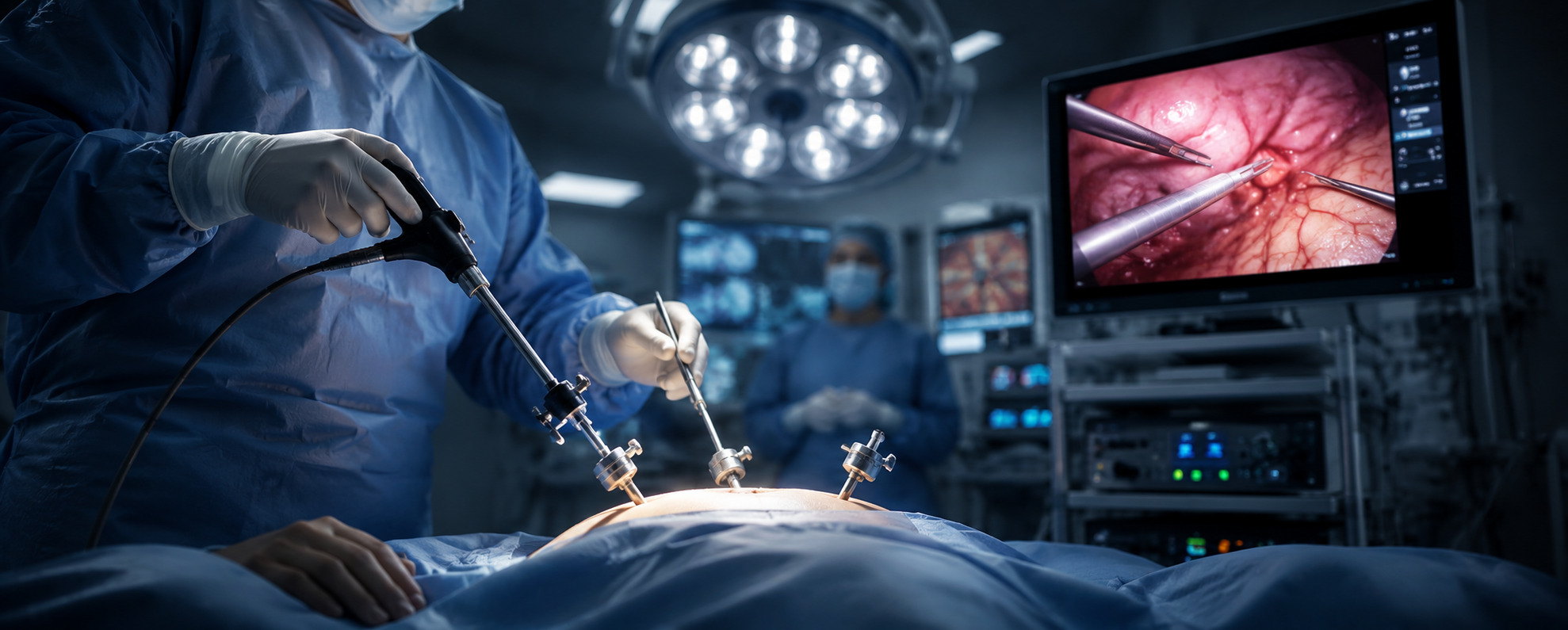
Depending on the procedure, a small camera called a laparoscope or endoscope may be inserted through one of the openings. The camera provides images that can be viewed on a monitor.
The surgeon can then use specialised instruments through other small openings to carry out the procedure.
The technique used depends on the condition being treated and the type of surgery required.
2. How Does Keyhole Surgery Work?
Keyhole surgery requires careful planning and specialised surgical equipment.
For many abdominal procedures, the surgeon makes small openings in the abdomen. A camera is introduced through one opening, while surgical instruments may be inserted through others.
The camera displays images of the area on a monitor, allowing the surgeon to guide the instruments during the operation.
Depending on the procedure, keyhole surgery may involve:
- Small surgical incisions
- A camera to view the area being treated
- Specialised surgical instruments
- Anaesthesia
- Monitoring throughout the procedure
Before surgery, the medical team will explain the preparation and instructions that apply to the particular procedure.
3. Why Are Smaller Incisions Used?
One of the main differences between keyhole surgery and open surgery is the size of the incision.
For suitable procedures, smaller incisions may offer benefits such as:
- Smaller scars
- Less disruption to surrounding tissues
- Less discomfort after some procedures
- Earlier movement after surgery
- A shorter hospital stay in some cases
- An earlier return to normal activities for some patients
The recovery experience is different for every patient. It also depends on the type of surgery, the underlying condition and the person's general health.
Keyhole surgery is not automatically the right choice for everyone. The surgical team will recommend an approach based on the individual circumstances.
4. What Conditions Can Be Treated With Keyhole Surgery?
Keyhole techniques are used for a range of surgical procedures. Depending on the condition and the surgeon's assessment, minimally invasive surgery may be considered for procedures involving the abdomen, pelvis, joints and other areas of the body.
Examples include certain:
- Gallbladder procedures
- Hernia repairs
- Appendicitis procedures
- Gynaecological procedures
- Gastrointestinal procedures
- Urological procedures
- Orthopaedic procedures
Not every condition can be treated through a minimally invasive approach. The surgeon will assess the diagnosis, medical history and other relevant factors before recommending the appropriate technique.
5. What Can You Expect During Recovery?
Recovery after keyhole surgery varies from person to person.
Some patients may experience soreness around the incision sites, tiredness or temporary discomfort following surgery. The medical team will provide instructions about wound care, medication, diet, physical activity and follow-up appointments.
During recovery, patients should:
- Keep the surgical wounds clean and follow the given wound-care instructions
- Take prescribed medicines as directed
- Follow the activity restrictions provided by the surgical team
- Attend scheduled follow-up appointments
- Contact the healthcare team if they notice unexpected or concerning symptoms
The time needed to return to normal activities depends on the type of procedure and the individual's recovery.
6. Is Keyhole Surgery Suitable for Everyone?
No. Keyhole surgery is not appropriate for every patient or every surgical procedure.
The decision may depend on:
- The type and location of the condition
- Previous surgeries
- General health
- Medical history
- Complexity of the procedure
- The surgeon's assessment
- Availability of appropriate equipment and expertise
In some situations, open surgery may be considered more appropriate. In other cases, a minimally invasive approach may be possible.
Your surgeon can explain the available options and recommend the approach that is appropriate for your condition.
When Should You Speak to a Surgeon?
If you have been advised to undergo surgery, it is normal to have questions about the procedure and recovery.
You can ask your surgeon:
- Why is surgery required?
- Is keyhole surgery an option for my condition?
- What are the possible benefits and limitations?
- What are the potential risks and complications?
- How long might recovery take?
- When can I return to my usual activities?
- What preparation is required before surgery?
Understanding the procedure beforehand can help you know what to expect.
Maruti Hospital provides surgical evaluation and treatment for a range of conditions. The choice of surgical technique depends on the patient's condition, medical history and the procedure being performed.
Frequently Asked Questions
1. What is keyhole surgery?
Keyhole surgery is a minimally invasive technique in which surgeons use small incisions, a camera and specialised instruments to perform certain procedures.
2. Is keyhole surgery less painful than open surgery?
Some patients may experience less discomfort because the incisions are smaller. However, pain and recovery can vary depending on the procedure and the individual.
3. Does keyhole surgery leave scars?
Yes. Keyhole surgery still involves incisions, but the resulting scars are generally smaller than those associated with traditional open surgery.
4. How long does recovery take after keyhole surgery?
Recovery depends on the type of surgery, the patient's overall health and how the individual recovers. Your surgeon can provide a more specific estimate.
5. Is keyhole surgery suitable for everyone?
No. It depends on the condition, the type of procedure and the patient's overall health. The surgeon will determine whether a minimally invasive approach is appropriate.
Conclusion
Keyhole surgery has become an important option for many surgical procedures. By using small incisions, a camera and specialised instruments, surgeons can treat selected conditions without making the larger incision used in traditional open surgery.
Smaller incisions may mean smaller scars and less discomfort for some patients, but the benefits and recovery time vary depending on the procedure and individual circumstances.
If you have been advised to undergo surgery, speak with your surgeon about the available approaches, expected recovery and possible risks. The right surgical method should always be selected according to your specific condition and healthcare needs.